Grandmaster Hsieh
Peng
6th
Generation Master of Wu Mei Pai
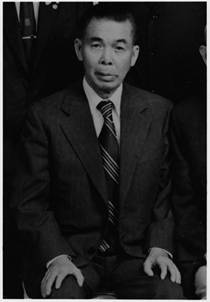 In 1913, an orphan boy of
thirteen called Hsieh Peng saved a monk's life, and in return the monk offered
to bring the boy to his temple in order to study kung fu. The boy loved martial arts and anxiously
agreed to accompany the monk to his temple if he could learn the famous
In 1913, an orphan boy of
thirteen called Hsieh Peng saved a monk's life, and in return the monk offered
to bring the boy to his temple in order to study kung fu. The boy loved martial arts and anxiously
agreed to accompany the monk to his temple if he could learn the famous
When he left the temple, Grandmaster Peng was
anxious to test his martial skill. He
entered every martial arts tournament he could find, traveling throughout
During the Chinese Nationalist period Grandmaster
Peng moved to
Grandmaster Peng was renowned for his mastery of
many other arts. As a boy he used his
photographic memory skills to memorize dozens of books, and his teacher used to
allow him to teach his class. Later he
worked as a traditional doctor's apprentice and once corrected one of his
master's prescriptions. The doctor recognized
the boy's prodigal skills and taught him his medicinal arts. As an adult Grandmaster Peng was also honored
as a masterful calligrapher, Feng Shui master, scholar, and traditional brush
painting artist specializing in the plum blossom.
Wu Mei Pai is a martial art that was nearly driven
to extinction. The closing of temples
and public execution of monks and nuns during the Cultural Revolution virtually
wiped out all the practitioners of this art, except Grandmaster Peng, who had
left the temple decades earlier. Grandmaster Peng's arrival to
In 1976, Grandmaster Peng brought his son, Han Ting
Peng to New York from Taiwan. Han Ting
also trained in Wu Mei Pai, displaying exceptional aptitude. In 1983 he and